Key Takeaways
- Hawaii has strong demand for skilled construction trades due to housing shortages, resort renovations, military facility upgrades, and climate resilience projects across Oʻahu, Maui, Hawaiʻi Island, and Kauaʻi.
- Construction-focused trade schools and apprenticeship programs in Hawaii offer faster, more affordable pathways than four-year degrees, with many students job-ready in 1–2 years.
- Core trades covered in this guide include carpentry, electrical, plumbing, painting, and roofing—all tied directly to real projects such as residential builds, commercial renovations, and storm hardening.
- Hawaii trade schools, including community colleges and specialized academies, offer programs in high-demand fields such as Construction, Transportation, Healthcare, Culinary Arts, Cosmetology, and Technology.
- Most credible programs lead to industry-recognized certifications, union or non-union apprenticeships, and can satisfy state licensing requirements when combined with on-the-job hours.
- Accreditation ensures that trade schools maintain quality education standards.
- Financial aid, GI Bill benefits, and paid apprenticeship wages help offset Hawaii’s high cost of living, and graduates can earn competitive wages with strong long-term stability in the local building industry.
- When considering affordability, fees—including tuition and materials—are a key part of the overall cost.
What Construction Trade Schools in Hawaii Are & Why They Matter
A construction trade school or technical program provides focused, hands-on training in building trades such as carpentry, electrical, plumbing, painting, roofing, HVAC, welding, and heavy equipment operation. Attending a trade school program in Hawaii means participating in immersive courses and campus activities that build practical skills and prepare you for a rewarding career. Unlike broad academic programs, these schools prepare students for specific jobs by combining classroom theory with shop work, labs, and real jobsite experience. The goal is straightforward: get you job-ready with practical skills that employers need right now.
Construction trade schools differ significantly from four-year colleges in Hawaii. Program lengths typically range from 6 months to 2 years for certificates and associate degrees, compared to the 4+ years required for a bachelor’s degree. Tuition costs are substantially lower—community college credits run around $131 per credit for residents, making a full program a fraction of what you’d pay at UH Mānoa. Most importantly, these programs focus on direct job skills rather than broad academics, meaning you can start earning a competitive wage much sooner while staying on-island. Programs at trade schools in Hawaii are also designed to align with local job market demands, especially in healthcare and skilled trades.
Public and nonprofit trade schools in Hawaii typically seek regional accreditation, while private trade schools are more likely to pursue national certification. The Accrediting Commission of Career Schools and Colleges is the most prominent accrediting agency for trade schools in Hawaii. Understanding the type of accreditation can help you choose a program that meets your career and educational goals.
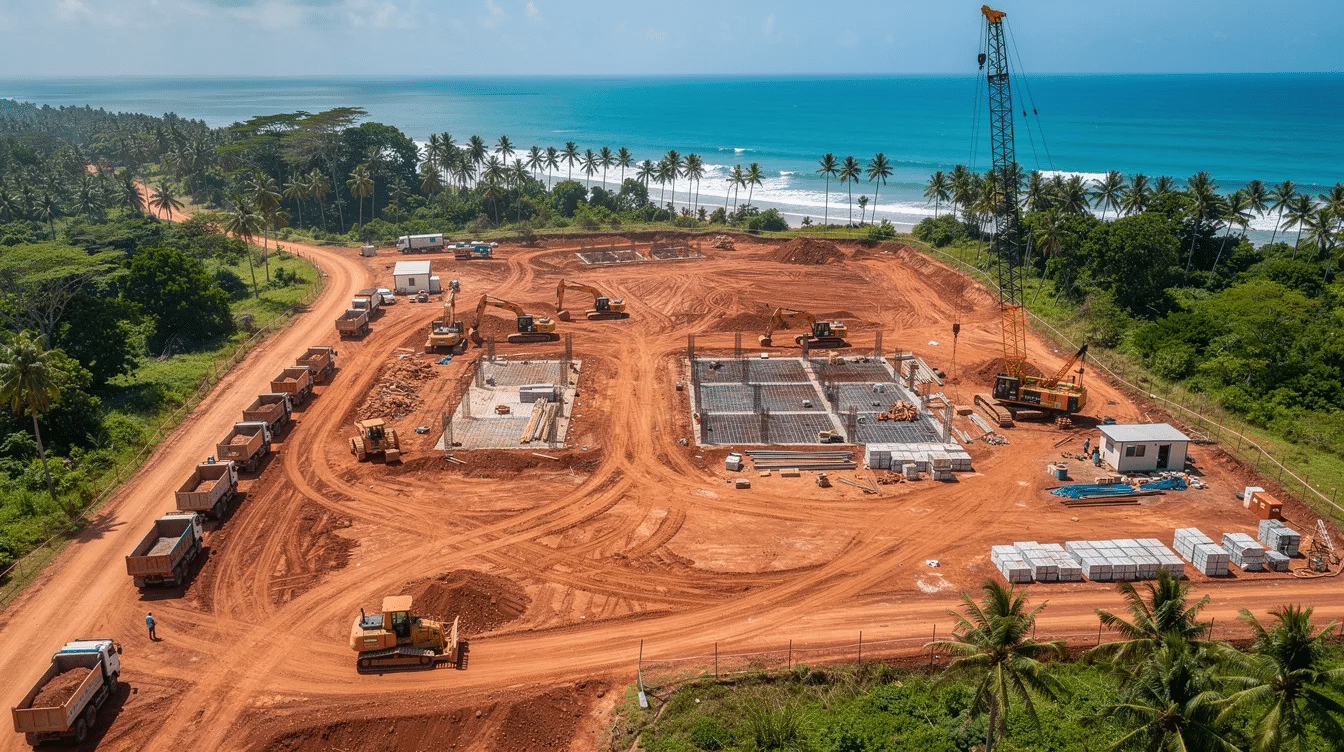
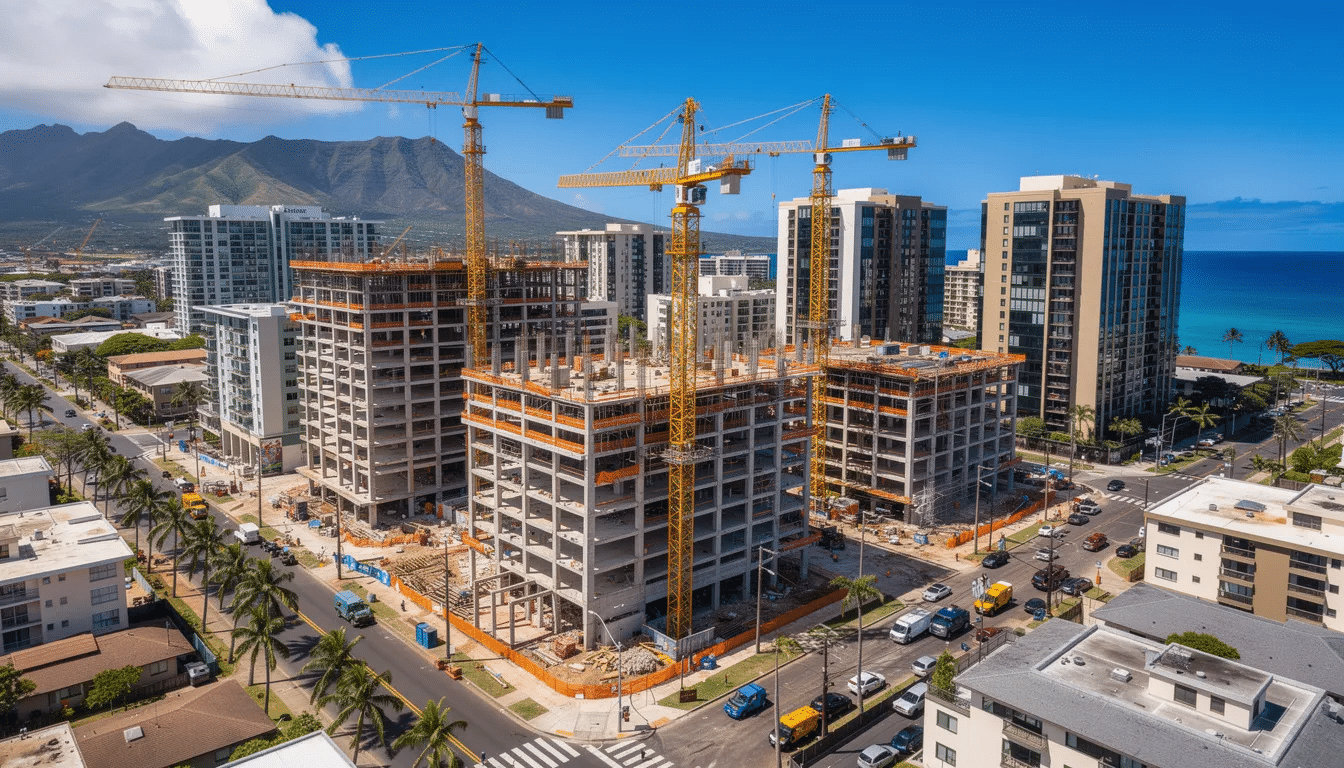
Construction trades are critical to Hawaii’s economy for several interconnected reasons. The state faces ongoing housing shortages, with estimates suggesting more than 50,000 affordable units are needed by 2030. Hotels and resorts on Oʻahu and Maui require constant renovation to meet tourism standards. Military base projects at Pearl Harbor–Hickam, Schofield Barracks, and other installations support over 40,000 jobs and demand skilled tradespeople for maintenance and upgrades. Airport and harbor infrastructure needs continuous attention. Climate resilience work—including flood mitigation, hurricane-resistant retrofits, and elevated construction to address rising sea levels—has become mandatory rather than optional.
Hawaii’s geographic isolation makes local training essential. Workers cannot be easily imported at scale from the mainland, and the state’s projected 20% labor shortage through 2030 makes developing local carpenters, electricians, and plumbers a workforce priority. The ongoing rebuild and mitigation efforts after the Lahaina wildfires on Maui, totaling a $3.5 billion recovery investment, underscore the urgent need for skilled construction workers on the islands. Coastal erosion challenges, energy-efficiency upgrades in older buildings, and the state’s goal of 100% renewable energy by 2045 all create ongoing employment for trained tradespeople.

Types of Construction-Focused Training Options in Hawaii
Construction training in Hawaii is delivered through multiple channels: public community colleges, UH system noncredit programs, private trade schools, union apprenticeships, and employer-sponsored or nonprofit academies. Many trade schools in Hawaii also offer healthcare programs and business courses alongside construction and other fields, providing a wide range of options. Understanding these options helps you choose the path that fits your schedule, budget, and career goals.
Public Community Colleges with Construction Trades Programs:
- Honolulu Community College (HCC) – The primary hub for construction trades on Oʻahu, offering Building Construction Technology, Carpentry Technology, and related programs with 1,000+ hours of supervised fieldwork
- Hawaiʻi Community College – Serves Hilo and West Hawaiʻi (Pālamanui campus) with carpentry, electrical installation, and refrigeration/air conditioning programs
- Kauaʻi Community College – Provides construction-related and facilities training tailored to the island’s resort, hotel, and housing maintenance needs
- UH Maui College – Offers facilities maintenance, sustainable construction, and energy-related courses supporting Maui’s residential and commercial projects
Hawaiian Trades Academy (operated by the Council for Native Hawaiian Advancement) offers a community-based training option with accelerated courses that run 3–14 weeks. Their curriculum includes OSHA safety certifications, CDL training, basic trade skills, and employability preparation across Kauaʻi, Maui, Molokaʻi, and Oʻahu. The Academy also offers various certifications, including CDL-A license and OSHA 10/30, through short accelerator classes.
Private training providers and contractors sometimes run short-term courses in specific skills, such as scaffold safety, concrete finishing, or solar PV installation. These courses complement longer certificate or degree programs and can add specialized certifications to your resume.
Union Apprenticeship Programs combine classroom instruction with full-time paid work over several years. These programs are run by or in partnership with local labor union chapters:
| Union |
Trade Focus |
Typical Length |
| IBEW Local 1186 |
Electrical |
4-5 years |
| Hawaii Carpenters Union |
Carpentry |
3-4 years |
| UA Local 675 |
Plumbing & Pipefitting |
5 years |
| Painters & Allied Trades |
Painting & Finishing |
3-4 years |
| Roofers & Waterproofers |
Roofing |
3-4 years |
Employer
– and state-sponsored programs, such as the Hawaii Job Corps Center in Waimanalo, offer tuition-free skilled trades training for ages 16-24, including construction basics, with job placement assistance. The Hawaii Job Corps Center provides free education and job training in over 100 fields for disadvantaged youth aged 16-24. This no-cost model serves residents from low-income backgrounds and career changers entering the building industry.
How Construction Training Differs from Traditional College in Hawaii
Many students and parents default to four-year degree paths at UH Mānoa, UH Hilo, or UH West Oʻahu. But for hands-on learners who want to work in the building industry, construction trade pathways offer a more direct route to employment.
Key Differences Between Trade Programs and Four-Year Degrees:
| Factor |
Trade Programs |
Four-Year College |
| Program Length |
6-18 month certificates, 2-year AAS |
4+ years for BA/BS |
| Daily Schedule |
Labs, shops, job sites |
Lecture halls, libraries |
| Cost per Credit |
~$131 (UH community college) |
$400+ (four-year campuses) |
| Focus |
Specific trade skills |
Broad general education |
| Earning Timeline |
Often within 1 year |
Typically after graduation |
Construction programs emphasize safety certifications (OSHA 10/30, fall protection, confined space entry), as well as tool skills, rather than extensive general education requirements. However, most community college programs still include reading, math, and introductory communication courses to ensure well-rounded competency. In addition, many trade schools in Hawaii incorporate liberal arts courses into their curricula, supporting general education and transfer pathways.
Many construction trade students begin earning a competitive wage through apprenticeships or entry-level helper roles while still in school. This “earn while you learn” model reduces or eliminates the need for student loans—a significant advantage given Hawaii’s high cost of living.
Advancement in construction trades depends heavily on skill mastery, work ethic, and licensing rather than academic degrees. Experienced journeymen and licensed contractors can eventually own their own business or supervise major projects, often out-earning many four-year degree holders in other fields.
Construction Trade Schools and Programs by Island
Training availability varies by island, and students may need to weigh commuting, temporary relocation, or hybrid delivery options when choosing a program. Students can also explore trade school options by city to find programs that are most accessible to their location.
Oʻahu
Honolulu Community College serves as the central hub for construction and trades education in Hawaii. Their diverse programs include Building Construction Technology, Carpentry Technology, Electrical Installation Fundamentals, and related certificates. The institution partners with unions in Honolulu’s industrial areas to deliver apprenticeship-related instruction, and maintains strong connections to military base renovation projects and high-rise residential construction.
Additional noncredit and short-term
construction courses are offered through Kapiʻolani CC and Leeward CC’s continuing education divisions. These include basic construction math, blueprint reading, and facilities maintenance—often in flexible evening and weekend formats that serve working adults balancing employment and education.
Maui
UH Maui College plays a key role in providing facilities maintenance, sustainable construction, and energy-related courses. The college’s programs support resort, residential, and infrastructure projects on Maui and neighboring islands. Following the Lahaina fires, programs have placed greater emphasis on hurricane-rated construction and fire-resilient construction methods.
Hawaiʻi Island
Hawaiʻi Community College in Hilo and its West Hawaiʻi campus at Pālamanui offer carpentry, electrical installation, and refrigeration/air conditioning programs. These feed into both residential and commercial construction work across the Big Island, including volcanic-resilient rural housing and geothermal energy facilities. The net price after aid averages around $8,200, making it accessible for residents.
Kauaʻi
Kauaʻi Community College offers a smaller but essential selection of construction-related, facilities, and basic trade skills training. Programs are tailored to the island’s resort, hotel, and housing maintenance needs, with particular attention to storm retrofits and coastal erosion challenges. The college maintains 100% acceptance with a net price of around $6,547 after aid.
Hawaiian Trades Academy and similar mobile or community-based programs run training cohorts in rural areas and on Molokaʻi and Lānaʻi, helping reduce barriers for residents outside major campuses.
Core Construction Trades in Hawaii
This guide focuses on five core trades: carpentry, electrical, plumbing, painting, and roofing. These are consistently in high demand across Hawaii’s islands and offer stable, well-compensated careers for those willing to commit to multi-year training and apprenticeship pathways.
Each trade offers distinct work environments and challenges. Some involve primarily outdoor work on scaffolds and rooftops; others require problem-solving with complex systems inside walls and ceilings. Your choice should align with your interests—whether that’s precision detail work, physical labor, working at heights, or troubleshooting electrical and mechanical systems—as well as your long-term earnings and licensing goals.
The following sections describe typical skills taught, program structure, safety training, hands-on requirements, and how each trade directly supports local building projects.
Carpentry Trade Programs in Hawaii
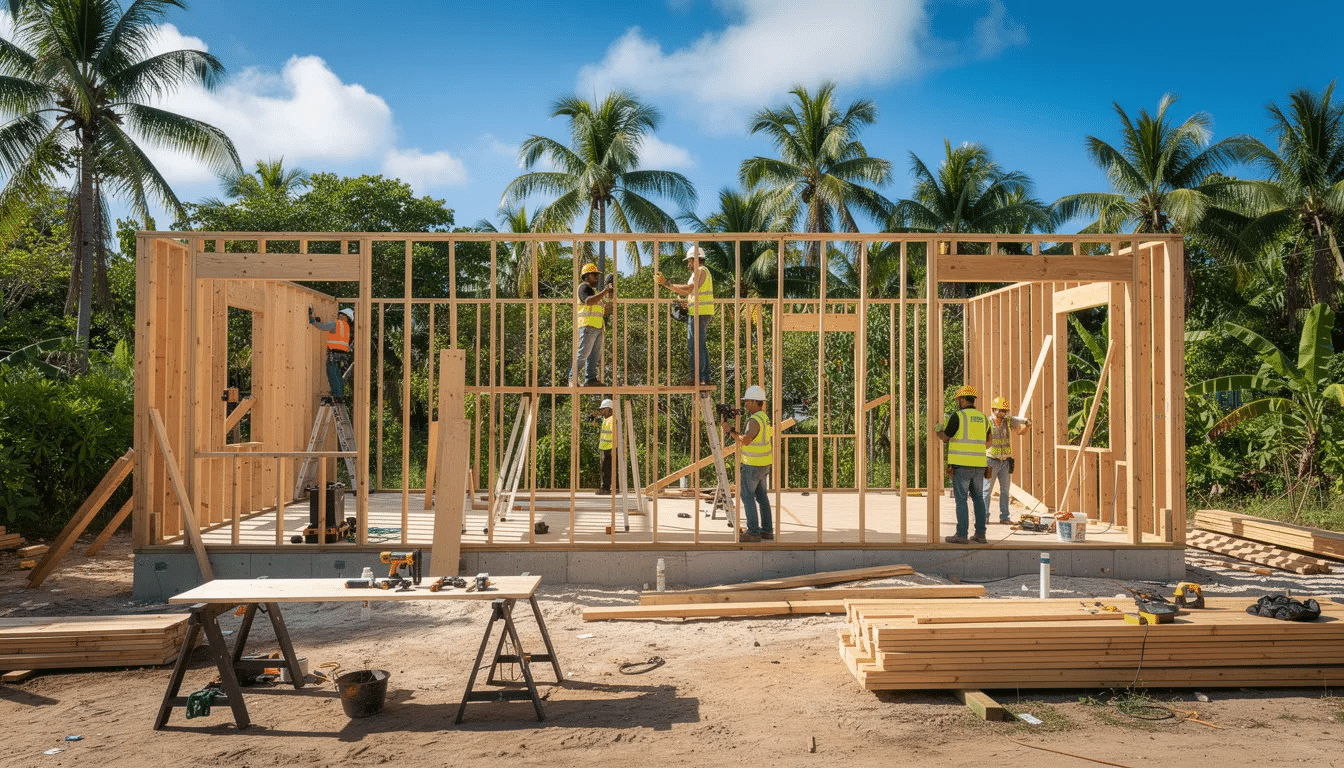
Carpentry is central to Hawaii’s housing and commercial building needs. Carpenters handle framing, formwork for concrete structures, interior finishes, and renovation work in older homes and hotels across all islands.
Skills Covered in Carpentry Training:
- Reading blueprints and construction plans
- Layout and measurement techniques
- Hand and power tool operation
- Wood and metal stud framing
- Concrete form construction
- Door and window installation
- Basic building codes for high-wind and seismic conditions
Many carpentry students enroll in Building Construction or Carpentry Technology programs at Honolulu Community College or Hawaiʻi CC. Others join the Hawaii Carpenters Union apprenticeship, which typically runs 3–4 years and combines classroom instruction with paid on-the-job training. Apprentices start around $18–20/hour and progress toward journeyman wages of $50+/hour.
Safety training is mandatory and thorough. Topics include fall protection on scaffolding and roofs, power tool safety, lifting and ergonomics, and OSHA 10 certification—typically completed in early coursework or pre-apprenticeship academies.
Carpentry skills connect directly to Hawaii projects: wood-frame homes in Kapolei and Kona, resort renovations in Lahaina and Waikīkī, and concrete/steel formwork on large government, school, and military buildings.
Electrical Trade Programs in Hawaii
The electrical trade is critical for homes, condos, hotels, and commercial building systems. With Hawaii’s push toward 100% renewable energy by 2045, electricians trained in solar PV installations are especially valuable.
Skills Taught in Electrical Programs:
- Electrical theory (AC/DC fundamentals)
- Wiring methods and conduit bending
- Motor controls and lighting systems
- Low-voltage systems (data, security, communications)
- Troubleshooting and diagnostics
- National Electrical Code (NEC) with Hawaii amendments
Many aspiring electricians pursue the IBEW Local 1186 apprenticeship program or enroll in electrical installation and maintenance programs at Hawaiʻi CC and other UH campuses that coordinate with employers.
Common Program Structures:
| Path |
Duration |
Format |
| Apprenticeship |
4-5 years |
Daytime jobsite work + evening/weekend classes |
| Certificate Program |
1-2 years |
Full-time or part-time, then helper positions |
| Combined Path |
Variable |
Certificate first, then apprenticeship |
Safety training covers lockout/tagout procedures, arc flash awareness, ladder and lift safety, and OSHA 10/30 certification. Hawaii’s combined hazards of moisture, heat, and confined spaces make safety awareness especially important on local job sites.
Electrical work in Hawaii includes high-rise condos in Honolulu, resort lighting and controls on Maui, electrical upgrades in aging public schools, and solar PV and battery storage installations across all islands.
Plumbing Trade Programs in Hawaii
Plumbing is essential for water supply, drainage, fire sprinklers, and gas systems in Hawaii’s buildings. Given the islands’ limited freshwater resources, proper plumbing installation and maintenance have environmental as well as practical importance.
Skills Typically Covered:
- Reading plumbing plans and specifications
- Installation and repair of water and waste lines
- Fixture installation and finishing
- Soldering and brazing techniques
- Fire sprinkler system basics
- Backflow prevention for water conservation
- Plumbing codes and inspection requirements
Many plumbers in Hawaii train through UA Local 675’s apprenticeship program or via community college courses that provide plumbing fundamentals before entering union or non-union employment. Apprenticeship length is typically 5 years, combining classroom learning in Honolulu or other training centers with full-time, paid work on job sites across Oʻahu and the neighbor islands.
Key safety topics include trenching and excavation safety, confined space entry (manholes, crawl spaces), hot-work handling, and PPE appropriate to wet, humid, and sometimes coastal conditions.
Plumbing skills are used on actual Hawaii projects, such as hotel bathroom renovations in Waikīkī, new subdivision infrastructure in Ewa and Kona, and upgrades to aging sewer systems in older parts of Oʻahu and Maui.
Painting and Finishing Trade Programs in Hawaii
Painting and finishing are vital for both aesthetics and building protection in Hawaii’s harsh environment. Intense sun, salt air, and moisture accelerate corrosion and deterioration, making skilled painters essential for long-term building maintenance.
Skills Covered in Painting Programs:
- Surface preparation (sanding, patching, priming)
- Interior and exterior coating application
- Spray equipment operation and maintenance
- Color matching and specialty finishes
- Waterproofing techniques
- Specialty coatings for concrete, steel, and wood in marine environments
Training may be provided through Painters & Allied Trades apprenticeship programs, community college noncredit courses, and on-the-job training with experienced painting contractors. Program lengths range from short 6-month certificates to multi-year apprenticeships.
Safety topics include respiratory protection when working with coatings and solvents, lead-safe practices for older buildings built before 1978, fall protection on scaffolds and lifts, and proper handling and disposal of hazardous materials.
Painting training connects directly to Hawaii’s fundamental needs: constant repainting and sealing of oceanfront condos in Waikīkī and Kāʻanapali, hotel interiors refreshed to meet tourism standards, and protective coatings on bridges and public infrastructure.
Roofing Trade Programs in Hawaii
Roofing is a high-demand trade in Hawaii because of intense sun, heavy rains, trade winds, and tropical storms that stress roofs on homes, condos, schools, and hotels. Following major weather events, demand for skilled roofers spikes dramatically.
Skills Taught in Roofing Programs:
- Asphalt shingle installation
- Metal roofing systems
- Tile roofing techniques
- Flat roofing membranes (TPO, EPDM)
- Flashing details and waterproofing
- Ventilation systems
- Wind-resistant and hurricane-rated assembly methods (170 mph ratings)
Roofing training is often delivered through Roofers & Waterproofers union apprenticeship programs and employer-based training. Some community college or continuing education courses cover building envelope and waterproofing basics that complement hands-on roofing experience.
Safety content is extensive: fall protection systems and harness use, ladder safety, weather-related hazards like slippery surfaces in sudden showers, and
heat stress management under intense tropical sun.
Roofing skills apply to projects such as reroofing older single-wall homes, resort and hotel roof replacements, solar-ready roof installations, and waterproofing upgrades in high-rain areas like Hilo and windward Oʻahu.
How Apprenticeships and Trade Schools Work Together in Hawaii
In Hawaii’s construction industry, apprenticeships and classroom-based programs are tightly linked, especially in union trades. Understanding this relationship helps you plan a clear path from training to licensure.
Pre-apprenticeship or certificate programs at Honolulu CC, Hawaiʻi CC, and other UH campuses prepare students with math, blueprint reading, and basic tool skills. Completing these courses makes applicants more competitive for formal apprenticeship openings, which can be highly sought after.
Typical Registered Apprenticeship Structure:
- Application and Selection – Pass aptitude tests, interviews, and drug screening
- Year 1-2 – Entry-level work with close supervision, foundational classroom instruction
- Year 3-4 – Increasing responsibility, advanced coursework, progressive wage increases
- Year 4-5 – Near-journeyman skill level, preparation for licensing exams
Apprentices receive multi-year paid employment with progressive wage increases at each “step,” plus mandatory related instruction hours in classrooms run by unions or partnered schools. This combination of earning and learning addresses Hawaii’s high cost of living while building skills.
Apprenticeships are often the preferred pathway for those seeking journeyman status and eventual eligibility for state journeyman or contractor licensing exams. In electrical and plumbing trades, especially, completed apprenticeship hours count toward licensing requirements.
Non-union contractors also operate apprenticeship or trainee programs aligned with state and federal standards, particularly in carpentry, concrete, and roofing. While these may offer different wage scales, they still provide structured training and industry-recognized experience.
Apprenticeship slots can be competitive. Strong attendance records, demonstrated work readiness, and solid math fundamentals from trade school coursework help applicants stand out during selection.
Admissions, Program Length, and Hawaii Licensing Considerations
While entry requirements for construction training programs are often accessible, licensing in Hawaii’s construction trades is tightly regulated to ensure safety and quality work. For many trade schools in Hawaii, especially those in fields like healthcare and caregiving, meeting health and wellness requirements—such as passing physical exams—is essential for admission and future licensing.
Program lengths can vary, with some short-term academies and certificate programs lasting as little as 3 to 14 weeks, allowing students to gain the skills needed for entry-level positions quickly.
Leeward Community College is notable for its dedicated nursing program, which has a high graduate success rate, reflecting the strong emphasis on accredited nursing education and hands-on clinical experience in Hawaii.
Admissions Requirements
Most community college trade programs require:
- High school diploma or GED
- Placement testing in math and English (100% acceptance at most UH community colleges)
- Basic tools-and-safety orientation for some programs
Apprenticeships may require:
- Passing aptitude tests
- Interviews with training coordinators
- Drug screening and physical examinations
- Age 18+ in most cases
- No prior experience necessary—programs build from zero
Program Length
| Program Type |
Typical Duration |
| Certificate |
1-3 semesters |
| Associate Degree (AAS) |
2 years full-time |
| Apprenticeship |
3-5 years depending on trade |
Hawaii Licensing Basics
Electricians and plumbers typically must complete specific on-the-job hours (often several thousand) plus classroom hours to sit for Department of Commerce and Consumer Affairs (DCCA) licensing exams. The pass rate for these exams averages around 70%, so adequate preparation is essential.
General building contractor licenses (e.g., Class B, C specialty) require a combination of verified experience, financial responsibility documentation, and exam passage. Many license holders started as journeymen from trade schools and apprenticeships, then worked toward contractor status over time.
Students should verify that the relevant licensing boards recognize their program’s coursework and apprenticeship hours. Academic advisors, union representatives, or state departments can help map a clear path to licensure in your chosen trade.
Costs, Financial Aid, and Paid Training Options
While Hawaii’s cost of living is high—Honolulu’s cost of living index sits at 189 compared to the national average of 100—construction trade training is generally more affordable than four-year degrees, and paid apprenticeships can significantly offset expenses.
The average cost of attending a private trade school in Hawaii is usually between $21,500 and $36,500, while public trade schools typically cost between $12,000 and $18,000. Average tuition fees for private trade schools range from $15,000 to $30,000, while public trade schools charge $6,000 to $12,000. In addition to tuition, students should also consider other fees such as student fees and fees for materials and equipment, which contribute to the overall cost of attendance. Financial aid, installment plans, and government funding are often available to help students manage tuition and related fees.
Realistic Cost Ranges
| Program Type |
Estimated Cost |
| UH Community College (resident) |
~$131/credit ($3,200-$3,500 annually) |
| UH Community College (non-resident) |
~$350/credit ($8,400+ annually) |
| Materials, tools, safety gear |
$500-$2,000 depending on trade |
| Private trade schools |
$3,000-$15,000+ depending on program |
Private trade schools and short academies may have tuition ranging from a few thousand to tens of thousands of dollars, depending on length and specialization. Students must carefully compare outcomes and accreditation before enrolling.
Financial Aid Options
- Federal Pell Grants – Up to $7,395 annually for qualifying students through FAFSA
- Hawaii Workforce Development Grants – Can cover up to 80% of costs for eligible unemployed residents
- Scholarships – Targeted to Native Hawaiian students, specific trades, or through community organizations
- Employer Tuition Assistance – Some contractors cover training costs for committed employees
GI Bill and Military Benefits
Veterans and service members can use GI Bill benefits for construction trades training at accredited institutions and approved apprenticeship programs. Benefits can cover 100% of tuition plus a housing stipend (approximately $2,500/month on Oʻahu), making this an excellent pathway for military-connected residents.
Paid Apprenticeships
Registered apprenticeships provide “earn while you learn” wages plus benefits. Starting wages typically range from $18-20/hour, progressing to $40-50+/hour at the journeyman level. In many union programs, tuition for related instruction is covered or heavily subsidized.
Contact campus financial aid offices, union training centers, and community organizations like Hawaiian Trades Academy to explore current scholarship opportunities that may cover tuition, tools, or transportation.
Career Outcomes and Construction Job Market in Hawaii
Hawaii’s ongoing housing demand, resort development, military investment, and infrastructure projects create steady demand for skilled tradespeople. The state’s $12 billion annual construction industry spend, combined with a projected 20% labor shortage through 2030, means job security for qualified workers.
Typical Entry-Level Roles After Training
- Apprentice carpenter or electrician
- Plumbing helper
- Facilities maintenance technician
- Painter’s helper
- Roofing installer
Starting wages for these positions typically exceed many entry-level retail or service jobs, and benefits packages through union employment add significant value.
Career Advancement Path
With experience and licensing, tradespeople can advance through multiple levels:
- Journeyman – Full credentials, independent work capability
- Foreman – Supervising small crews
- Superintendent – Managing multiple crews and projects
- Estimator – Calculating project costs and bids
- Building Inspector – Government or private sector
- Contractor/Owner – Running your own business
Earning Potential
| Position |
Typical Hourly Range |
| Entry-level apprentice |
$18-22 |
| Mid-level apprentice |
$25-35 |
| Journeyman |
$40-55 |
| Top 10% electricians |
$90,000+ annually |
Long-term stability is strong in Hawaii. Buildings require constant maintenance due to salt, sun, moisture, and storms, so demand for repair, renovation, and upgrade work remains robust even when new construction slows.
Some workers pursue specialized niches—solar installation, energy-efficient retrofits, historic preservation, or disaster resilience work—leveraging additional certifications to command higher pay. Green jobs in construction are projected to grow 15% by 2028.
Research local job postings, union wage sheets, and Hawaii Department of Labor projections to understand current and projected demand in your chosen trade.
How to Choose the Right Construction Trade Program in Hawaii
There is no single perfect path to a successful career in construction trades. The right program depends on your island location, financial situation, and long-term goals.
When choosing a trade school in Hawaii, it’s essential to confirm that the school is accredited by a recognized accrediting agency. Accreditation ensures that the program meets industry standards and prepares students for licensure and employment.
Practical Evaluation Steps
- Confirm accreditation of the school or registration status of the apprenticeship through the accrediting commission or state department
- Review program outcomes including completion rates and job placement percentages (Honolulu CC reports 95% placement rates)
- Check alignment with Hawaii licensing requirements for your chosen trade
- Verify instructor qualifications – look for industry professionals with real-world experience
Logistics to Consider
- Commute distance on Oʻahu or between islands
- Class times compatible with work or family obligations
- Availability of evening, weekend, or online/hybrid options for theory portions
- Schedule flexibility for working adults
Recommended Actions
- Visit campuses such as Honolulu CC, Hawaiʻi CC, or UH Maui College to tour labs, observe equipment and safety culture, and meet instructors
- Contact union halls for carpenters, IBEW, plumbers, painters, and roofers to learn about upcoming apprenticeship openings and requirements
- Talk to working tradespeople on your island to get honest perspectives on the work environment
- Reflect on your interests – math and problem-solving suit electrical; comfort with heights fits roofing; attention to detail serves finishing trades
Develop a realistic budget factoring in tuition, tools, transportation, and potential income from part-time construction jobs or apprenticeships while in school. Many programs can accommodate working adults who plan their schedule carefully.
Frequently Asked Questions About Construction Trade Schools in Hawaii
Can I train for a construction trade in Hawaii if I am working full-time or supporting a family?
Yes. Many programs at Honolulu CC, Hawaiʻi CC, Kauaʻi CC, and UH Maui College offer evening or weekend classes specifically designed for working adults. Apprenticeships are full-time paid work combined with scheduled classes, so you earn while you train. Success requires strong time management and family support, but thousands of Hawaii residents have completed trade training while managing work and family responsibilities.
Do I have to move to Oʻahu to get quality construction training?
Not necessarily. While Oʻahu has the largest concentration of programs and union training centers, Hawaiʻi Community College and UH Maui College provide strong options on the neighbor islands. Mobile academies like Hawaiian Trades Academy bring short-term training to Kauaʻi, Molokaʻi, and other communities. However, some students choose to relocate temporarily for specialized apprenticeships or to access more programs.
I’m not strong in math—can I still succeed in a construction trade school?
Basic math (fractions, measurements, geometry, and sometimes algebra) is essential in all trades, but community colleges and apprenticeship programs often offer skill-refresher courses and tutoring resources. Consistent practice can bring most motivated students up to the required level. Don’t let math anxiety stop you from exploring a trade that interests you—support is available.
Are there paths from construction trades into management or further education?
Absolutely. Many foremen, superintendents, and construction managers started as apprentices. After gaining experience, some pursue additional education in construction management or engineering at UH campuses, often while continuing to work. Trade experience is highly valued in management roles because it enables you to understand the work from the ground up. Some tradespeople also become building inspectors, estimators, or start their own contracting business.
How soon after starting a program can I realistically expect to get on a job site?
It varies by program. Some pre-apprenticeship programs and accelerated academies place students on job sites within weeks for supervised work experiences. Certificate programs may take one semester to cover first aid training, safety fundamentals, and basic skills before site exposure. Apprentices typically begin paid site work soon after being accepted into a program, with responsibilities increasing as skills and safety awareness grow.
Student Support Services at Hawaii Trade Schools
Student support services are a cornerstone of success at Hawaii’s trade schools, including Honolulu Community College and other leading institutions. These schools understand that navigating the path to a successful career in high-demand fields like construction, healthcare, and culinary arts requires more than just technical training—it also takes strong support systems.
From the moment students begin the application process, dedicated advisors are available to guide them through program selection, enrollment steps, and financial aid applications. Trade schools in Hawaii offer comprehensive financial counseling, helping students access scholarships, grants, and other resources to make education more affordable. Many schools also provide tutoring, mentorship, and academic workshops to ensure students stay on track with their coursework.
Career counseling is another vital resource that connects students with job placement services, resume workshops, and interview preparation. These services are designed to help students transition smoothly from training to employment in Hawaii’s competitive job market. Whether you’re interested in construction, healthcare, or culinary arts, Hawaii’s trade schools offer a range of support services to help you achieve your goals and thrive in your chosen career.
Campus Life for Construction Trade Students in Hawaii
Campus life for construction trade students in Hawaii is vibrant, hands-on, and deeply connected to the local community. Trade schools across the islands foster an environment where students learn by doing, working on real projects that mirror the demands of Hawaii’s construction industry. Through hands-on training in modern workshops and on active job sites, students develop practical skills under the guidance of experienced industry professionals.
Beyond the classroom, students benefit from continuing education opportunities, such as workshops and certifications that keep them current with the latest construction technologies and safety standards. Many schools also host networking events, guest lectures, and site visits, allowing students to build relationships with employers and industry leaders.
This focus on hands-on learning and professional development ensures that graduates are well-prepared for high-demand construction careers. The supportive, collaborative campus culture helps students build confidence, master essential skills, and transition smoothly into the workforce, making Hawaii’s trade schools an excellent choice for those seeking a rewarding career in construction.
Online Trade School Options for Construction Careers
Online trade school options are expanding rapidly in Hawaii, making it easier than ever for students to access high-quality training programs in construction trades. These online programs are designed to meet the needs of busy students, offering flexible schedules and remote access to coursework in carpentry, electrical work, and plumbing.
Many online trade schools in Hawaii blend virtual instruction with hands-on training, ensuring students gain both theoretical knowledge and practical experience. Mentorship opportunities and virtual labs help students develop the skills needed for a successful career in the construction industry, even if they can’t attend in-person classes.
With online learning, students across Hawaii can access top-notch construction trade programs without relocating, balancing their education with work or family commitments. This flexible approach opens doors to rewarding careers in construction, allowing more residents to join the high-demand workforce and contribute to the state’s growing building industry.
Industry Partnerships and Connections in Hawaii’s Construction Sector
Strong industry partnerships are a defining feature of Hawaii’s trade schools, providing students with direct access to real-world training and employment opportunities in the construction sector. By collaborating with local construction companies, unions, and state departments, trade schools ensure their training programs align with current industry needs and standards.
These partnerships allow students to participate in internships, apprenticeships, and job shadowing experiences, where they can apply their skills on actual job sites and learn from seasoned professionals. Schools also invite industry experts to lead workshops and guest lectures, keeping students informed about the latest trends, technologies, and best practices in construction.
For students, these connections translate into better access to employment opportunities and a smoother transition from training to a successful career. For Hawaii’s construction industry, these partnerships help develop a skilled workforce ready to meet the state’s ongoing demand for qualified tradespeople. By fostering collaboration between schools and employers, Hawaii’s trade schools play a vital role in supporting economic growth and building a strong future for the islands.