
Drones in construction are fundamentally changing the game. These unmanned aerial vehicles are making construction sites smarter, safer, and more efficient. From mapping out job sites to closely monitoring progress, unmanned aerial vehicles are becoming an essential tool for builders everywhere.
If you work in the construction industry, you are likely wondering what all the buzz is about. Why are more and more construction companies using drones on their sites? What can these high-tech helpers do that traditional methods cannot?
In this guide, we explore how drones are reshaping the construction industry. We examine the various drone applications, the benefits they offer, and some real-world examples of construction drones in action. You will get a clear picture of why drone technology is a must-have for modern construction projects.
ABC Central Texas offers safety classes for our members online and in person. We offer OSHA training through a partnership with UT Arlington with classes held in our office. We also hold monthly CPR classes.
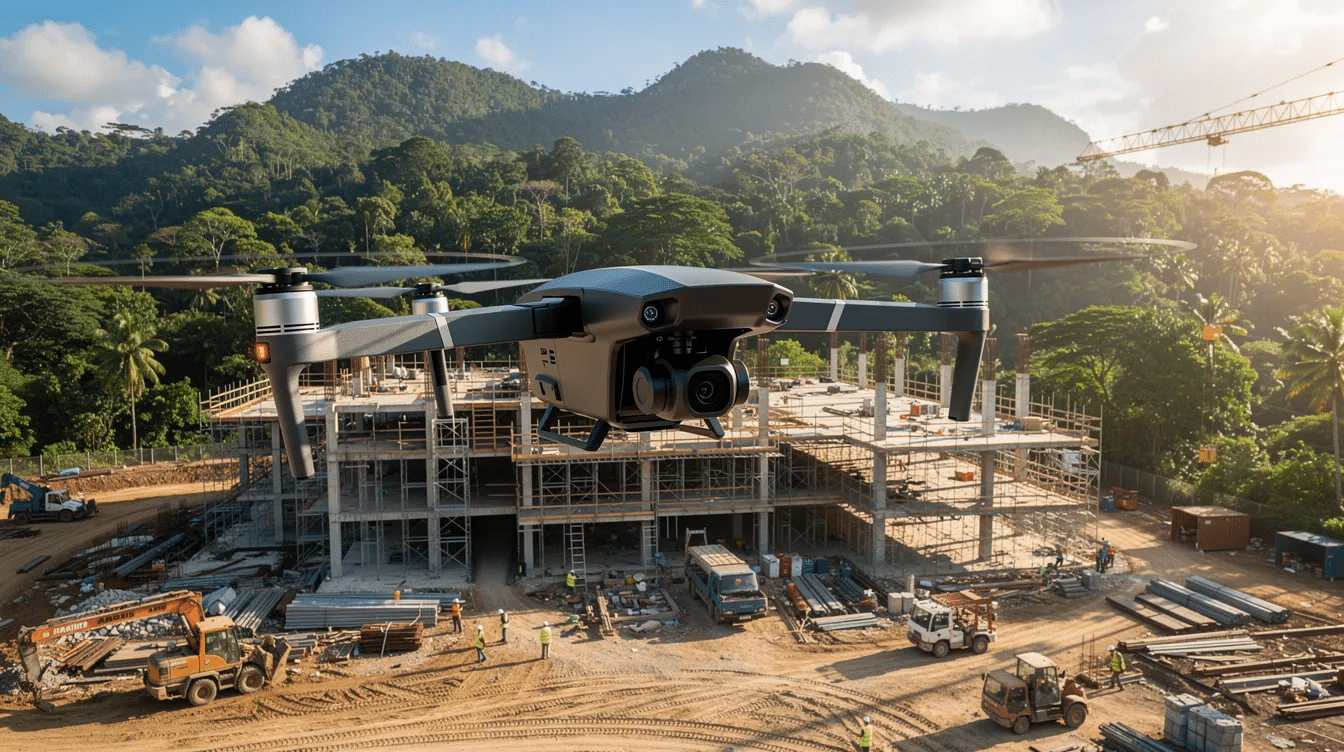
A construction drone is an unmanned aerial vehicle (UAV) used on building sites to gather data and perform inspections. Think of them as flying robots equipped with high-resolution cameras and advanced sensors. These drones capture detailed aerial imagery and data, giving builders a complete aerial perspective of their projects.
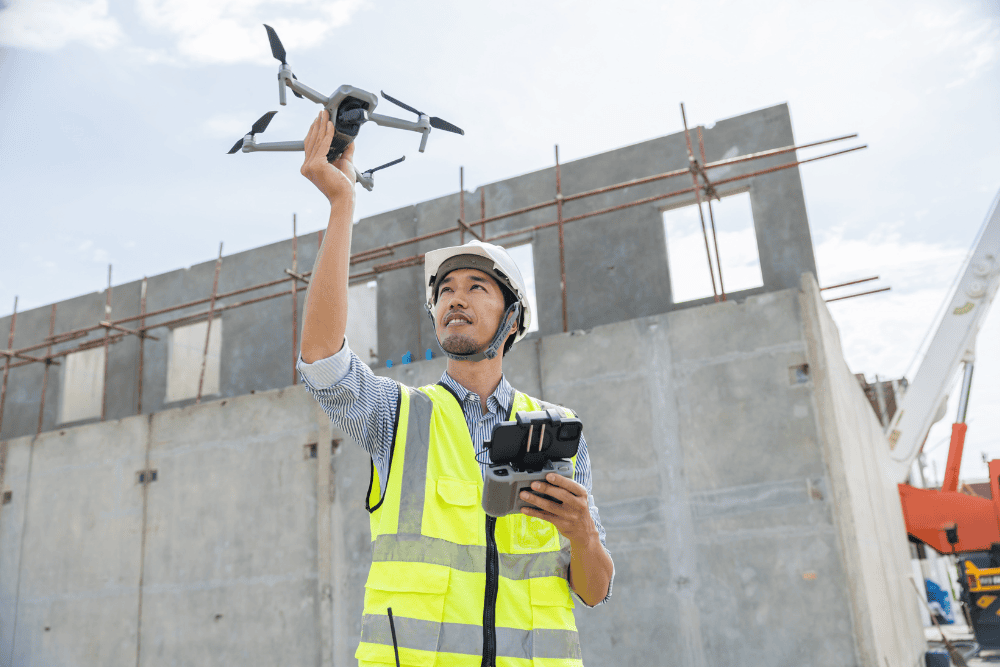
Most construction drones are quadcopters, meaning they have four rotors for stable hovering and movement in any direction. Pilots on the ground control them with a remote or a dedicated mobile app. This level of control allows for precise data collection over the entire construction site.
These aerial vehicles come in different sizes and types to suit various tasks. Some are small and agile, perfect for inspecting tight or hard-to-reach areas. Others are larger, fixed-wing drones capable of carrying heavier equipment for more complex tasks across large areas.
Drones in construction serve many purposes that improve workflows and outcomes. Drones provide critical information that was once difficult or time-consuming to obtain. Here are some of the main ways they are used on a construction project.
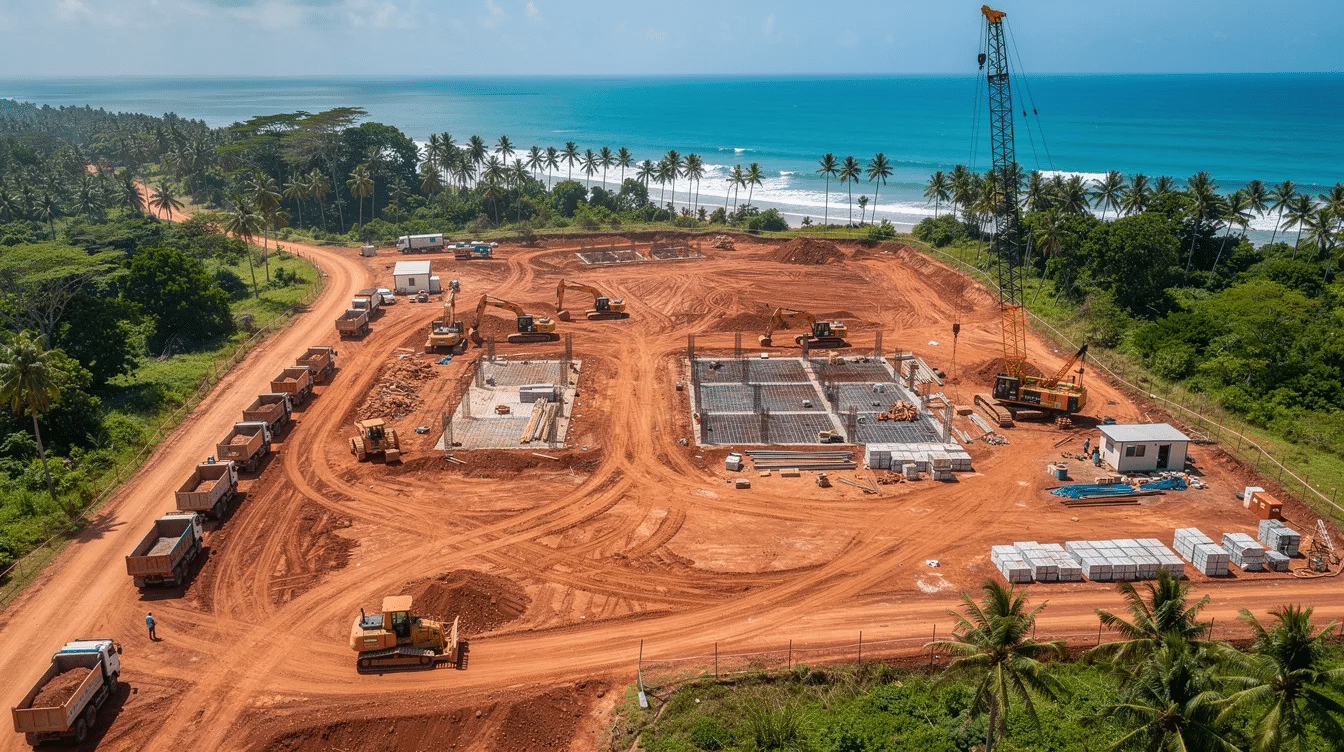
Drones can quickly fly over a construction site and take thousands of high-resolution photos. These images are then stitched together using photogrammetry techniques to create detailed 3D maps and terrain models. This process gives builders accurate maps and site models in a fraction of the time spent on ground-based methods.
Using a drone for topographic surveys can be significantly faster than traditional surveying. This speed allows for more frequent site updates, helping teams catch issues early in the site planning phase. The precise data collected helps create a solid foundation for the entire construction project.
Regular drone flights over a site are an effective way to monitor construction progress. The detailed aerial view helps project managers spot delays or problems quickly and efficiently. They can compare current aerial imagery with the planned schedule to see if the actual construction is on track.
This method of progress monitoring provides visual proof of work completed, which is valuable for stakeholder reports and payment applications. Visual updates from drone flights help enable project managers to make informed decisions. This keeps the project moving forward smoothly.
This real time data stream is invaluable. It helps teams identify potential bottlenecks before they become major issues. Consistent monitor construction progress reports lead to better-managed projects from start to finish.
Drones can reach high or dangerous areas safely, making them ideal for detailed inspections. They can examine roofs, towers, scaffolding, and other hard-to-reach areas without putting workers at risk. This helps identify potential risks associated with unstable structures or faulty equipment.
These unmanned aerial vehicles can spot unsafe conditions, such as missing guardrails or improperly stored materials, from a safe distance. Using drones for this purpose significantly reduces the need for manual inspections in hazardous locations. This practice improves overall site safety and aids in ensuring compliance with safety regulations.
The time spent on inspections is also greatly reduced. A drone can perform a comprehensive facade inspection in hours, a task that might take a team of workers days to complete. This efficiency allows for more frequent checks and a safer work environment.
From above, it is easy to see where materials and equipment are on a site. Drones assist managers in optimizing the layout of materials and performing equipment tracking. This level of inventory management can reduce theft and improve operational efficiency.
Effective asset management is critical on any large construction site. By tracking the location and usage of heavy machinery, companies can minimize idle time and optimize allocation. This helps in reducing downtime and associated costs.
Drones can also conduct volumetric measurements of stockpiles, such as sand or gravel. This provides precise data for inventory management and procurement planning. This helps avoid material shortages or over-ordering.
Construction companies face strict environmental regulations. Environmental monitoring drones are used to monitor a site’s impact on the surrounding area. They can track soil erosion, water runoff, and dust levels.
Drones equipped with specialized sensors monitor air and water quality. This helps in ensuring compliance with local and federal environmental standards and building codes. The data collected can be used to prove that a construction company is meeting its environmental obligations.
These monitoring drones can also survey vegetation and wildlife habitats around large construction sites. This is especially important for infrastructure development projects near sensitive ecosystems. This proactive approach helps avoid costly fines and project delays related to compliance issues.
Strengthening Hawaii’s Workforce Through Diverse Trade Training
ABC Hawaii Chapter offers Five Trades, Carpentry, Electrical, Plumbing, Painter, and Roofing. We continually seek additional crafts and trades which are needed to maintain our Hawaii’s workforce.
Now that we know what construction drones can do, let’s look at why they are so valuable to construction companies. The advantages go far beyond just getting a nice aerial photo. The drone applications in the construction sector are transforming workflows.
Drones speed up many tasks that used to take days or even weeks. A drone can survey a large site in a matter of hours, not days. This quick turnaround means less downtime and faster decision-making for the entire project team.
The automation of data collection from drone flights frees up skilled workers to focus on other critical tasks. This leads to increased productivity across the board. The efficiency gains are a primary driver for the adoption of drone construction techniques.
Drone data is highly accurate and reliable. 3D models created from drone imagery can achieve accuracy within a few centimeters. This precision helps reduce errors and rework, saving both time and money over the course of a project.
Accurate as-built data captured by drones is essential for quality control. It allows teams to compare the actual construction against the design models. This is particularly important in complex civil engineering and infrastructure development projects.
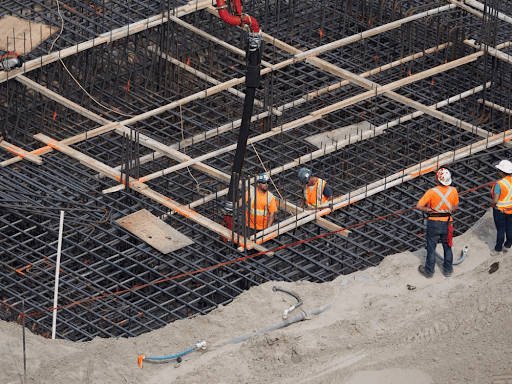
By using drones for inspections and surveys, workers spend less time in dangerous situations. They no longer need to climb scaffolding or work near unstable structures for routine checks. This practice directly reduces the risk of accidents and injuries on the construction site.
Drones help identify potential safety hazards before they cause an incident. For example, a drone can spot a crack in a high wall or loose debris on a rooftop. Addressing these potential risks proactively creates a safer environment for everyone on site.
While drones require an initial investment, they can lead to significant savings over time. They reduce labor costs associated with surveys and manual inspections. Their accuracy also helps prevent costly mistakes and the need for rework.
Improved inventory management and equipment tracking also contribute to cost savings. By minimizing material waste and equipment theft, drones help keep the project budget in check. The return on investment for a drone program can be realized quickly on a large construction project.
Drone imagery provides clear, visual updates on construction progress. A comprehensive view of the entire site helps keep all stakeholders informed and aligned. This includes everyone from workers on the ground to clients and investors located off-site.
The detailed aerial imagery makes it easy to communicate complex information. Instead of relying on blueprints and written reports, project managers can show visual evidence of progress and challenges. This transparent communication fosters trust and collaboration among the project team.
Join ABC Hawaii
We help you win work, enhance safety, and increase profits. Join our community to access elite training and advocate for free enterprise. Elevate your impact in the construction industry today!
Let’s look at some case studies of construction companies that are successfully using unmanned aerial vehicles on their projects. These examples highlight the practical benefits of this technology.
This major construction firm uses drones on most of its projects for various tasks. On one site in Boston, they used drones to track the installation of 600 piles. The aerial perspective helped them spot misalignments quickly, saving valuable time and preventing costly errors down the line.
This company used monitoring drones to oversee the construction of a 25-story building in Nashville. Weekly drone flights helped them monitor construction progress and communicate updates to stakeholders. The drone data was integrated with their Building Information Modeling (BIM) system for comprehensive project management.
On a large airport expansion project, Hensel Phelps used drones to create detailed 3D models of the site. These models helped them plan crane locations and material storage efficiently. The company estimates that using drones saved them over $1 million on this single project by improving site planning and logistics.
Not all drones are created equal, and different types are suited for different drone applications. The most common types of unmanned aerial vehicles used in the construction industry include fixed-wing, multirotor, and hybrid models. Understanding their differences is important for selecting the right tool for the job.
| Drone Type | Best For | Pros | Cons |
|---|---|---|---|
| Fixed-Wing Drones | Surveying large areas and long-range mapping | Long flight time, covers large areas quickly, high efficiency. | Requires a runway or catapult for takeoff and landing. |
| Multirotor Drones | Detailed inspections, site monitoring, and 3D modeling | Can hover in place, easy to maneuver in tight spaces, vertical takeoff and landing (VTOL). | Shorter flight time, can be less stable in high winds. |
| Hybrid VTOL Drones | Large-scale projects requiring both detailed inspection and broad mapping | Combines the long flight time of fixed-wing with the hovering ability of multirotor drones. | More complex and expensive than other types. |
These drones look more like small airplanes. They are highly efficient and can cover large areas quickly, making them ideal for surveying large construction sites. However, they typically need a runway-like space to take off and land.
These are the most common type of construction drone, including quadcopters and octocopters. They can hover in place and move in any direction, which is perfect for capturing detailed aerial imagery and performing close-up inspections of structural components. They are easy to control but generally have a shorter flight time than fixed-wing drones.
These drones combine features of fixed-wing and multirotor models. They can take off and land vertically like a multirotor but fly efficiently over long distances like a fixed-wing aircraft. This makes them a versatile but often more expensive option for complex projects.
Drones are only as useful as the drone data they collect and how that data is processed. Specialized software is necessary to turn raw aerial imagery into actionable insights. This is where the true power of drone technology comes to life.
This software helps pilots plan and automate drone missions. It can create pre-programmed flight paths to get consistent data collection over time. This automation is critical for effective progress monitoring and site surveying.
This type of software turns thousands of drone photos into accurate 3D models and maps. Popular options like Pix4D and DroneDeploy use photogrammetry techniques to create detailed outputs. These models are used for measurements, site planning, and checking construction quality.
These tools help combine drone data with existing Building Information Models (BIM). This creates a comprehensive digital twin of the construction project. This integration allows teams to compare as-built conditions with the as-designed models to spot deviations.
Advanced software uses AI to automatically analyze drone imagery. It can detect safety hazards, identify quality control problems, or even count materials on site. This automated analysis saves time and helps project teams focus on solving problems.
Using drones in construction is not as simple as buying one and flying it over a site. There are important rules and practical considerations that construction companies must address. Proper planning and adherence to regulations are necessary for a successful drone program.
In the United States, commercial drone use is regulated by the Federal Aviation Administration (FAA). Pilots must be certified under the FAA’s Part 107 rules. There are also regulations about where and when drones can fly, particularly near airports or over people.
Drones can capture a lot of data, including potentially sensitive information about a project or adjacent properties. It is important to have clear policies about data collection, storage, and use. Respecting privacy is a critical part of responsible drone operation.
Effective drone use requires skilled pilots and data analysts. Construction companies need to invest in proper training to get the most out of their drone programs. A well-trained team can operate safely and turn drone data into valuable insights.
Drones cannot fly in all conditions. High winds, rain, and extreme temperatures can ground a drone, potentially delaying data collection. Companies need to have backup plans and consider weather patterns when scheduling drone flights.
The role of drones in the construction industry continues to grow. Several exciting trends are on the horizon that promise to make this technology even more impactful. These advancements will further integrate drones into daily construction workflows.
Future drones may be able to fly and collect data with minimal human input. They could automatically detect and report issues on site, such as safety violations or construction defects. This level of automation will free up even more time for project teams.
Advances in 5G technology could allow drones to stream high-quality video and data in real time. This would enable project managers to make instant decisions based on live drone insights. Real time monitoring from anywhere in the world will become a reality.
By regularly scanning buildings and infrastructure, drones could help predict when maintenance is needed before problems occur. A drone could spot early signs of wear on structural components. This proactive approach to asset management will extend the life of buildings and reduce long-term costs.
Drones might work alongside other robots on construction sites in the future. Imagine a drone spotting an issue and automatically directing a ground robot to investigate or fix it. This interconnected web of technology will lead to new levels of efficiency and automation.
Drones in construction are more than just a cool gadget. They are a powerful tool that is changing how we build from the ground up. From improving safety to boosting efficiency, unmanned aerial vehicles are helping construction companies work smarter, not harder.
As technology advances, we can expect drones to become even more integrated into construction workflows. They are not replacing human workers but are instead giving teams new perspectives and capabilities. These tools help solve old problems in new ways.
Whether you are a small contractor or a large construction firm, it is worth considering how drones could benefit your projects. The future of the construction industry is looking up. It’s high in the sky where the drones fly, capturing data that builds a better tomorrow.